Ecommerce Email List Building: Smart Strategies for Growth
Have you ever wondered why some online stores thrive while others struggle to keep customers returning? The answer often lies in a powerful but underestimated tool: ecommerce email list building. Unlike social media platforms where algorithms dictate visibility, an email list gives you direct access to your audience—your store’s most valuable digital asset. But how do you start building one that actually drives sales?
Think about this: if Instagram or Facebook shut down tomorrow, would you still have a way to reach your customers? That’s where email comes in. With a strong list, you control the conversation, nurture loyalty, and generate repeat purchases. Statistics show that email marketing delivers one of the highest returns on investment among digital strategies, often outperforming paid ads by a wide margin.
So, what’s the first step? From choosing the right tools to designing irresistible offers, setting up an email list doesn’t have to be overwhelming. In this guide, we’ll explore why ecommerce email list building is critical, practical ways to grow your subscriber base, and proven strategies to turn those subscribers into lifelong buyers. Let’s dive in.
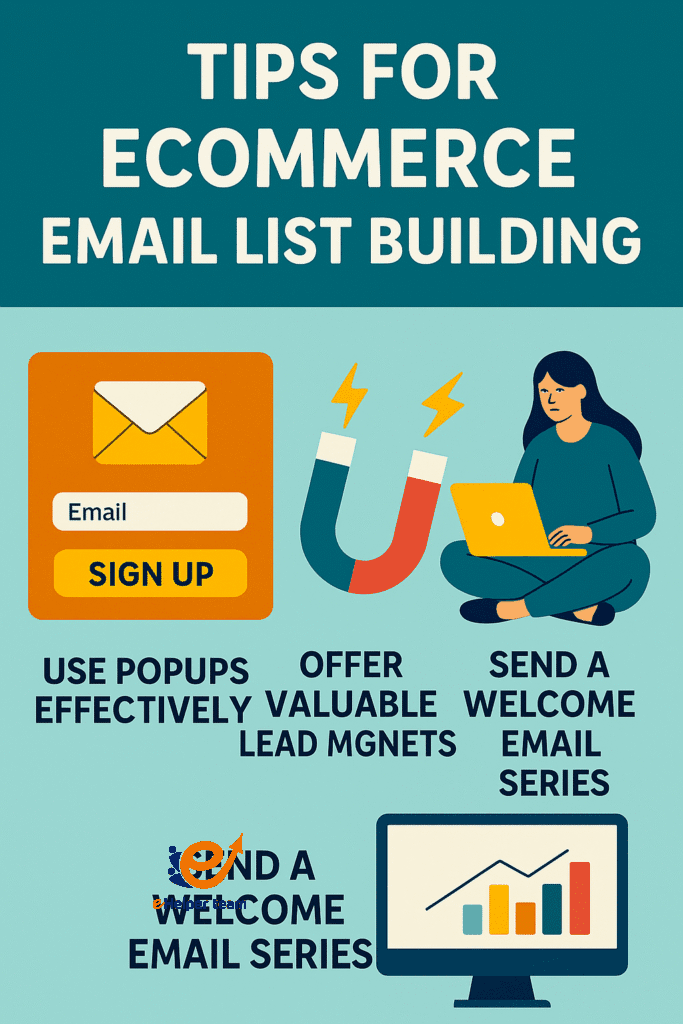


Why Ecommerce Email List Building Is Your Most Valuable Marketing Asset
1. Higher ROI and Direct Customer Connection
Email marketing consistently outperforms many advertising channels. Studies show that for every dollar spent on email, businesses see an average return of $36. That’s because emails land directly in your customer’s inbox, bypassing ad-blockers and algorithms.
2 .Ownership vs Rented Audiences
Unlike social media followers, your email list belongs to you. Algorithms can change overnight, but an email list remains your property. Owning your audience ensures stability and independence from third-party platforms.
3. Long-Term Engagement and Retention
An email list allows for nurturing—whether through product updates, educational content, or exclusive offers. This builds long-term trust and repeat business.
Getting Started: Setting Up Your Ecommerce Email List
Choosing the Best Email Marketing Platform: Klaviyo vs Mailchimp
When it comes to the best email marketing platforms, two popular choices are Klaviyo and Mailchimp.
Klaviyo is designed with ecommerce in mind, offering deep integrations with platforms like Shopify and WooCommerce.
Mailchimp is beginner-friendly, budget-conscious, and ideal for small businesses just starting out.
Platform Comparison Table
| Feature | Klaviyo | Mailchimp |
|---|---|---|
| Ecommerce Integrations | Excellent | Good |
| Automation Tools | Advanced | Moderate |
| Pricing | Higher | Affordable |
| Best For | Scaling ecommerce brands | Beginners |
Budgeting and Signup Form Best Practices
Start small but think long-term. Keep signup forms simple—asking only for the email address initially. Add extra fields once trust is established.
Lead Magnet Ideas for Ecommerce That Work
Discounts and Exclusive Offers
Offer a 10–15% discount code for first-time subscribers. This instantly converts hesitant visitors into buyers.
Free Shipping Thresholds
Free shipping is one of the strongest motivators for customers to join your list. Promoting “free shipping over $50” can dramatically boost signups.
Educational Guides and Checklists
Digital resources such as “The Ultimate Guide to Skincare Routines” or “10 Styling Tips for Men’s Wear” attract subscribers who value expertise.
Interactive Quizzes or Calculators
Quizzes like “Find Your Perfect Coffee Blend” not only entertain but also personalize customer experience—encouraging signups.
Popup Strategies to Capture Emails Without Annoying Visitors
Exit-Intent Popups
Triggering a popup when someone is about to leave your site captures lost opportunities. Offer a discount code or a freebie.
Timed and Scroll-Triggered Popups
Instead of showing a popup immediately, wait until visitors scroll halfway down the page or spend 30 seconds browsing. This improves user experience.
Mobile-Friendly and UX-Focused Design
Ensure popups are easy to close and mobile-optimized. A bad user experience can harm conversions.
Best Practices in Welcome Sequences and Nurturing
Crafting Your Welcome Email Series
A strong welcome sequence introduces your brand story, values, and products. Spread this across 3–5 emails.
Segmentation Based on Behavior
Segment customers by purchase history or browsing behavior. This ensures your emails stay relevant.
Personalization and Dynamic Content
Using first names, personalized recommendations, and tailored offers increases open rates.
Real-World Case Study: Ecommerce Store That Succeeded with Email List Building
A skincare brand implemented popup strategies and offered a free eBook on skincare routines. Within three months:
List grew by 40%.
Sales from email accounted for 30% of total revenue.
Klaviyo’s automation boosted customer retention rates.
This proves how effective ecommerce email list building can be when executed with consistency.
Measuring Success: Key Email Marketing Metrics
Open Rates: Measure interest in subject lines.
Click-Through Rates: Track engagement with content.
Conversion Rates: Reflect true sales impact.
Revenue Per Subscriber: Evaluates profitability.
(Second link here → E-commerce marketing strategies)
Common Mistakes to Avoid
Buying email lists—leads to low engagement.
Ignoring mobile optimization—half of emails are opened on mobile.
Over-emailing inactive subscribers—damages brand reputation.
Summary + Call-To-Action
Building your list isn’t just about collecting emails—it’s about building trust, loyalty, and predictable revenue. Start small, choose the right platform, and implement strategies consistently.
Legal Compliance in Ecommerce Email List Building
Building an email list is powerful, but it must be done ethically and legally. Compliance with data protection laws is critical to avoid fines and maintain customer trust.
GDPR (General Data Protection Regulation)
If you serve European customers, GDPR requires explicit consent before collecting emails. This means using unchecked opt-in boxes and clear explanations of how data will be used. Customers should also have easy access to unsubscribe at any time.
CAN-SPAM Act
In the US, the CAN-SPAM Act sets the rules for commercial emails. Key requirements include:
Clear identification that the message is an advertisement.
A valid physical business address in every email.
An opt-out mechanism that works promptly.
Building Trust Through Transparency
Being upfront about your email practices increases customer confidence. Always let subscribers know how often they’ll hear from you and what type of content they can expect.
Advanced Segmentation Strategies
One-size-fits-all emails rarely convert. Advanced segmentation allows you to target specific customer groups with tailored content.
Behavior-Based Segmentation
Browsed but didn’t buy: Send a reminder email featuring products they viewed.
Repeat customers: Offer loyalty rewards or early access to new collections.
Value-Based Segmentation
Differentiate between high-value customers (frequent buyers) and one-time purchasers. Reward VIPs with exclusive offers to strengthen loyalty.
Geographic Segmentation
Tailor campaigns to local holidays or shipping offers relevant to specific regions.
Effective Types of Ecommerce Email Campaigns
Cart Abandonment Emails
Nearly 70% of shopping carts are abandoned. A well-timed email—offering free shipping or a discount—can recover many of these lost sales.
Re-Engagement Campaigns
Inactive subscribers reduce engagement metrics. Send win-back campaigns with subject lines like “We miss you—here’s 15% off your next order.”
Seasonal and Holiday Campaigns
Seasonal sales like Black Friday or Christmas present huge opportunities. Tease your audience with sneak peeks and countdown timers.
Integrating Email with Other Marketing Channels
Email works best when integrated into your larger digital marketing ecosystem.
Email + SMS Marketing
Combine email campaigns with SMS for a stronger impact. For example, send an SMS reminder one hour before a flash sale email.
Email + Social Media
Run retargeting ads on Facebook or Instagram for subscribers who clicked but didn’t purchase.
Email + Content Marketing
Use emails to drive traffic to your blog posts or YouTube tutorials, enhancing brand authority.
Frequently Asked Questions
Q1. Why is ecommerce email list building so important?
Because it gives you direct, high-ROI access to customers without depending on third-party platforms.
Q2. Which is better, Klaviyo or Mailchimp?
Klaviyo is better for scaling ecommerce businesses, while Mailchimp is ideal for beginners.
Q3. How many emails is too many?
Sending 2–3 emails per week is optimal for most ecommerce stores.
Q4. What makes a good lead magnet for ecommerce?
Discounts, free shipping, exclusive guides, and quizzes work best.
Q5. Can I grow my list without popups?
Yes, through embedded forms, checkout signups, and social media lead campaigns.
Conclusion
Building an email list for your ecommerce store isn’t just another marketing tactic—it’s your most valuable long-term asset. Unlike social media platforms that change overnight, your email list is fully owned by you, giving you direct access to customers whenever you need to connect, sell, or build trust.
Through the right lead magnet ideas for ecommerce, smart popup strategies, and reliable tools like Klaviyo or Mailchimp, you can grow a highly engaged subscriber base. When nurtured with personalized welcome sequences, behavior-based segmentation, and consistent value-driven campaigns, your email list becomes a predictable source of revenue and customer loyalty.